

Physical AI and Domestic Robots Take Center Stage in Automation Equipment Market
A robotic arm picks up a metal part, positions it with millimeter precision, and begins welding. No human guides it. The machine learned the task by watching a worker do it once.
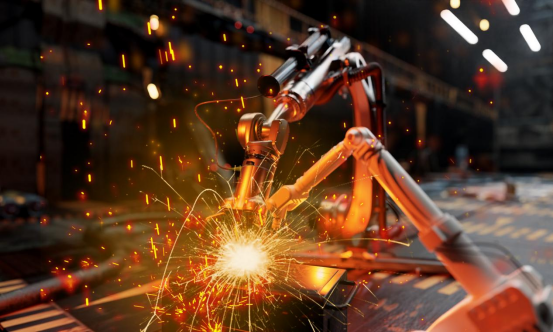
Image Source:699pic.com
That is not a demonstration. It is happening on factory floors right now.
Teradyne Robotics introduced this technology in Taipei this week. Their new AI Trainer uses imitation learning. Workers demonstrate a task, and the robot collects motion and force data. Then it replicates the job on its own .
The company calls this Physical AI. Machines no longer just follow fixed programs. They perceive, judge, and adapt. At the Taipei Automation Expo, UR and MiR also showed a dual-arm robot mounted on an autonomous mobile robot. It moves between workstations and performs assembly tasks without fixed installations .
The shift is happening fast. The automation market is coming out of two sluggish years. Roland Berger expects 2026 to be the first year of real growth momentum. Beyond that, catch-up investments could push annual growth to around 9 percent through 2030 .
China is leading the charge. In the first half of 2026, the country’s robotics industry reached 165.5 billion yuan in output, up 24.5 percent year-on-year . In the first quarter alone, industrial robot exports surged 42 percent, reaching 148 countries and regions .
Domestic manufacturers are breaking into territory long held by foreign brands. Estun Automation, based in Nanjing, now operates China’s first production line where robots build robots. The line can produce over 90 different robot models autonomously .
The company deployed more than 200 robots on a major electric vehicle maker’s production line earlier this year. The robots handle spot welding, gluing, material handling, and arc welding. Estun’s welding robots use AI-powered vision systems. A laser camera scans the workpiece, software analyzes the geometry, and the robot finds the welding path without manual teaching .
Estun now holds 10.6 percent of China’s industrial robot market, the top spot among all brands. The company controls its own controllers, operating systems, and servo systems. Over 95 percent of core components are developed in-house .
Collaborative robots are also gaining ground. Estun’s cobot shipments grew over 40 percent year-on-year in the first quarter of 2026. The machines are now deployed in 107 different applications across more than 370 factories .
In Yiwu, a Geely plant is running nearly 100 Siasun robots on its main welding lines. Chinese robots on automotive body lines used to be unthinkable. Foreign brands dominated that space for decades. After four years of joint development and more than 1,000 technical fixes, Siasun and Geely made it work .
New technologies are lowering barriers to adoption. Simulation and digital twins let engineers test feeding systems before building them. RNA Automation now uses AI and 3D geometric deep learning to model how parts will behave in vibratory bowls. No more build-test-modify cycles that drag on for weeks .
In Shanghai this week, LEEV Industrial Automation is showing RGV transport systems, gantry robots, and intelligent conveyor solutions at the furniture machinery fair. The shift is clear: factories want integrated systems, not standalone machines .
Not every deal goes smoothly. A welding robot framework agreement between Qianjiang Robot and Honglu Steel expired this week. The customer bought 920 robots instead of the planned 1,888, citing market changes . That is a reminder that automation adoption still faces headwinds.
But the direction is unmistakable. Physical AI is moving out of labs. Chinese manufacturers are winning market share at home. Exports are climbing. And the automation equipment market is finally shaking off its slowdown.