

AI, Geopolitics Fuel Renewables Energy Equipment Boom
The renewable energy equipment sector has seen strong growth in the first half of 2026. Export numbers are up. Orders are flowing in. New technologies are coming online.
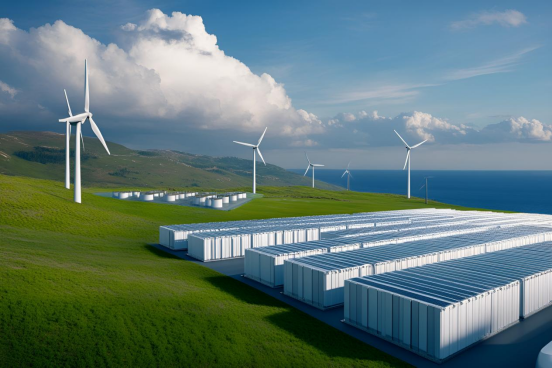
Image Source: 699pic.com
Chinese customs data tells a clear story. In the first six months of 2026, inverter exports reached 383 billion yuan, up 25 percent year on year . June exports alone hit $12.3 billion . Australia saw growth of 199 percent, while African markets expanded 48 percent .
Europe remains a core market. Inverters exported to Europe reached 144 billion yuan in the first half, up 23 percent . But new regions are stepping up. Asia recorded 22 percent growth, reaching 138 billion yuan . The shift is happening quickly.
Why is demand rising? A few factors.
The energy transition is moving faster. Photovoltaic capital costs have dropped significantly. By 2030, solar PV capital expenditure is projected at $400 to $750 per kilowatt, falling to $300 to $550 by 2050 . Wind costs are also trending down.
Geopolitics is another driver. The Middle East conflict has pushed energy security to the top of policy agendas . Energy price volatility is making renewables more attractive . Countries are looking for stable, homegrown power sources.
The AI boom is creating new demand. Data centers need stable, green power. This is driving demand for wind and solar equipment. In a recent report, Global Energy Monitor noted that China’s in-construction solar capacity is about 262 GW, with wind at 251 GW.
China’s dominance in the supply chain is drawing attention. The country controls roughly 98 percent of the solar and battery component supply chain . At The Smarter E Europe 2026 event, about 750 Chinese companies exhibited, making them the second-largest national group after Germany.
This has triggered policy responses. In late June, reports emerged that the U.S. is drafting a ban on foreign inverters over security concerns. The EU has also decided to exclude Chinese-made inverters from public energy projects . Some European officials are worried about implementation. One utility executive told Reuters that a total ban on Chinese products is “very, very complicated”.
Chinese wind turbine makers are also expanding. China holds about 80 percent of the global wind turbine market . In July, CRRC Zhuzhou Electric signed a deal to supply 100 wind turbines to German manufacturer Senvion. This is the first large-scale entry of Chinese MW-level turbines into the EU market.
On the storage side, overseas orders for Chinese energy storage companies reached 366 GWh in 2025, up 144 percent year-on-year . Australia, the U.S., Saudi Arabia, and Chile were the top destinations.
Looking ahead, the outlook remains strong. Cost declines, policy support, and AI-driven power demand will keep pushing the sector forward. But trade tensions are a growing risk. Manufacturers are responding by building local production capacity in target markets. The shift from exporting products to exporting ecosystems is already underway.