

Packaging Equipment Market Shifts Toward Smarter, More Flexible Systems
The packaging equipment sector is undergoing a visible shift in 2026. Industry events and market data point to the same direction: buyers want more than just speed now.
Global packaging equipment market was valued at $45.83 billion in 2025 and is projected to reach $48.07 billion in 2026, a 4.9 percent increase . By 2030, the market could hit $58.4 billion, growing at about 5 percent annually . Asia-Pacific remains the largest regional market, with China playing a dominant role .
What is driving the change? A few things stand out.
First, automation is moving beyond simple mechanization. Factories are adopting integrated systems that combine robotics, vision technology, and closed-loop controls . At interpack 2026 in Düsseldorf, machinery suppliers talked less about futuristic concepts and more about solving practical production problems . Flexibility, uptime, and ease of maintenance were recurring topics.
Second, e-commerce continues to push packaging demand. Online retail requires packaging that protects products during shipping while being easy to unpack . This drives demand for equipment that can handle rapid format changes and diverse product sizes.
Third, sustainability is no longer optional. Equipment manufacturers are designing machines compatible with recyclable substrates, lightweight containers, and mono-material constructions . At trade shows, green packaging solutions are now a standard requirement, not a niche feature.
On the technology front, AI is moving from pilot projects to real applications. At interpack 2026, Italian machinery association UCIMA presented EVA, a large language model developed specifically for packaging machine manufacturers . Machine builders are embedding intelligence directly into equipment, using edge computing for real-time data processing and analytics .
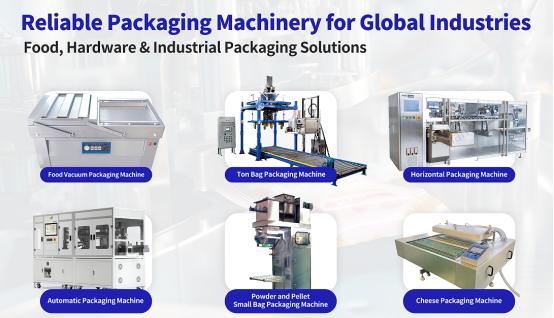
Chinese manufacturers are also gaining ground. One example is MaiTeWei Intelligent, a packaging automation company founded in 2015. It holds over 40 patents and exports to more than 50 countries, including the US, Germany, and Brazil . The company produces carton forming machines, bagging machines, and automated packaging lines for food, electronics, and e-commerce sectors.
At ProPak China 2026 in Shanghai, the shift from standalone machines to integrated smart production lines was visible throughout the exhibition halls . Visual inspection systems, adaptive packaging controls, robotic palletizing, and intelligent warehouse scheduling were mainstream offerings. Buyers from Bangladesh and Uzbekistan told exhibitors they now prefer complete integrated solutions over piecemeal equipment purchases .
Tariffs and trade tensions are reshaping procurement strategies. Many companies are moving toward dual sourcing and regional manufacturing to reduce exposure to tariff corridors . Equipment vendors are establishing regional manufacturing footprints and spare parts distribution centers to maintain service levels.
Looking ahead, the packaging equipment market appears set for steady expansion. Automation adoption is still early in many manufacturing sectors. Sustainability pressures will keep pushing innovation. And e-commerce shows no sign of slowing down.