

Electric Cable Exports Surge as Global Demand Rises
Factories are busy making electric cables in 2026. Orders are coming in from everywhere.
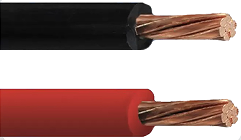
Export numbers tell the story. In March 2026, China’s cable exports hit 28.13 billion yuan, up 82 percent from the same month last year . That set a new monthly record. For the first quarter overall, cable exports reached 65.10 billion yuan, up 57 percent year on year . The first five months of the year saw 126.92million tonnes of cable shipped overseas, an 8.12 percent increase from 2025 .
Europe is driving much of this growth. In March, exports to Europe surged 691 percent compared to last year . Asian and African markets also showed solid gains .
What is behind the boom? Three big forces.
First, grid modernization. Utilities around the world are upgrading their networks. China’s State Grid invested over 129 billion yuan in the first quarter of 2026, up 37 percent year on year . That created a huge wave of cable orders. Power grids remain the backbone of cable demand.
Second, AI data centers. These facilities need massive amounts of high-speed cables and power distribution cables. SMM forecasts copper demand from AI data centers will grow 55 percent this year . It is not a small niche anymore. It is a major demand driver.
Third, the energy transition. Offshore wind, solar farms, and energy storage projects all require extensive cabling. One industry report projects the global wire and cable market will reach $247 billion in 2026 .
Technology is changing the product mix. OKI Electric Cable launched a new robot cable rated for 105°C in February, targeting AI robot and semiconductor manufacturing applications . The cable is about 20 percent slimmer than conventional models and offers high flexibility for bending, sliding, and twisting movements.
Green cables are another trend. Prysmian claimed a world first in March by creating a negative-carbon-footprint cable, using bio-polymers and recycled materials that remove more carbon than they release . In China, lawmakers have called for policies to promote green cables, noting that green products can cost 5 to 20 percent more but offer lower lifetime emissions and better energy efficiency .
Consolidation is happening too. In May, Nexans announced it would acquire Republic Wire, a U.S. manufacturer, to establish a foothold in the American low-voltage cable market . The U.S. low-voltage cable market is estimated at about 12 billion euros annually. The move shows how global players are positioning for growth.
On the import side, China still brings in specialized cables. From January to May 2026, cable imports totaled 53,400 tons, mainly for high-end applications where domestic products cannot yet match global standards .
What does this all mean? The cable industry is not what it used to be. It is tied to big trends: AI, renewables, grid upgrades. Export demand is strong. Domestic policy supports innovation. Companies that can produce specialized cables for high-growth sectors will keep winning.