

Factory Machinery Demand Rises as Automation and Reshoring Drive Investment
The factory machinery sector is seeing steady growth in 2026. After several slow years, orders are picking up across multiple regions.
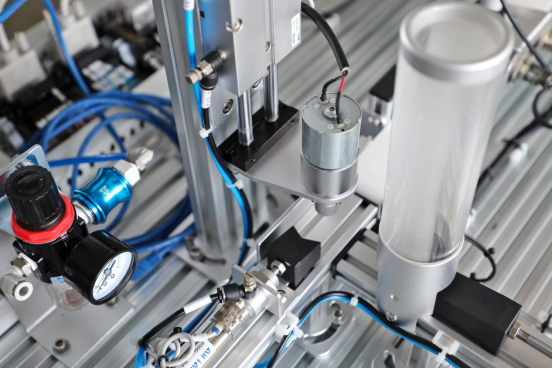
Image Source: 699pic.com
Global mechanical engineering output is expected to increase by 3.1 percent in 2026, according to a March report from Atradius. Growth remains below potential. The sector still faces trade uncertainty and high capital costs. But the direction is positive .
In the United States, demand for manufacturing technology has been strong. April 2026 orders totaled $593.6 million. That is a 12.5 percent drop from a surprisingly strong March, but a 33.2 percent increase from April 2025. Over the first four months of 2026, orders reached $2.19 billion, up 28.9 percent from the same period last year .
What is driving this growth? Automation. The average order value is rising faster than inflation. This suggests customers are adding more automated features to their machinery purchases rather than just buying basic equipment .
Contract machine shops, the largest customer group for factory machinery, have reversed a trend of slower growth. In recent months, their order growth has matched the broader market pace. Aerospace manufacturers are also buying, though they appear to be purchasing less sophisticated equipment to boost capacity quickly .
The industrial machinery market globally was valued at $613.44 billion in 2025 and is expected to reach $650.19 billion in 2026, a 6 percent increase. By 2030, the market could hit $847.68 billion, growing at about 6.9 percent annually .
Asia-Pacific remains the largest regional market, holding 42.35 percent of global revenue in 2025. China’s factory machinery sector continues to benefit from government investment in high-tech and automation. Output is expected to grow 6.1 percent in 2026, with special purpose machinery growing 8.3 percent .
One trend reshaping the industry is reshoring. JCB, the British heavy equipment manufacturer, is building a 1-million-square-foot factory in San Antonio, Texas. The plant will produce telescopic handlers and aerial access equipment. About 85 percent of what JCB sells in North America will be made there once the plant is running. The company doubled its planned footprint in direct response to US tariff policies .
Similarly, American Rheinmetall is spending $41 million to expand six manufacturing facilities across Michigan, Ohio, and Maine. The investment includes a 65-foot bridge mill that can process complete vehicle hull structures in a single setup. This supports production for US Army programs including the XM30 infantry fighting vehicle .
Europe is seeing a more modest rebound. Mechanical engineering output in the EU and UK is expected to grow just 1 percent in 2026 after contractions in 2024 and 2025. Germany, which accounts for more than 45 percent of eurozone mechanical engineering output, is expected to see a 0.8 percent rebound in 2026. Higher defence spending and infrastructure investment should help, but demand from the automotive sector is expected to weaken further .
One concern across the industry is competition from China. European machinery exports have lost market share over the past five years while China’s share has grown. In many export markets, Chinese manufacturers are offering competitive pricing and increasingly sophisticated products .
The shift toward electric vehicles is also changing machinery demand. Less equipment will be needed for conventional powertrains. More will be required for batteries and related electrical components. Manufacturers are adapting their product lines accordingly .
Looking at specific factory machinery categories, earth-moving equipment remains the largest segment, capturing 30.85 percent of the industrial machinery market in 2025. Industrial robots and automation cells are the fastest-growing product category, advancing at a 12.57 percent CAGR toward 2031. Collaborative robots that work safely next to operators are gaining traction, especially with Robot-as-a-Service contracts reducing upfront costs .
Construction remains the largest application sector at 29.12 percent of the market. Agricultural applications are growing fastest at 10.71 percent annually, driven by precision spraying systems and autonomous tractors .
The IMTS 2026 manufacturing technology show, scheduled for September in Chicago, will feature more than 1,800 exhibitors across 1.2 million square feet. Organizers note that US manufacturing technology orders grew in 2025 for the first time since 2021, and momentum has carried into 2026 .
The recovery is not explosive. But after several difficult years, the factory machinery sector is moving in the right direction. Automation, reshoring, and government investment in strategic industries are all contributing to the rebound. The hardest part may be keeping up with demand without creating supply bottlenecks.