

China achieves major breakthrough in the clinical application of brain-computer interfaces
Brain-computer interfaces (BCIs) are considered a core technology for next-generation human-computer interaction and a key arena in global cutting-edge technology competition. Based on implantation methods, BCIs are mainly divided into three technical paths: invasive, semi-invasive, and non-invasive, each with its own emphasis on accuracy, safety, and applicable scenarios.
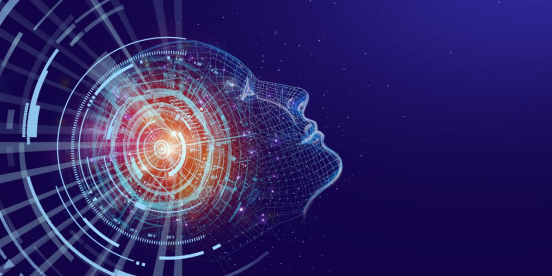
Image Source:699pic.com
On January 28, 2026, a significant breakthrough was achieved in China’s BCI field: the independently developed wireless fully implantable BCI system, “Beinao-1,” successfully completed clinical implantation and rehabilitation verification on six patients, marking a milestone achievement. Clinical data shows that a spinal cord injury patient who had been paralyzed for 5 years could walk independently with the help of a walking aid after systematic training; multiple subjects with high-level paraplegia successfully achieved brain-controlled cursors and device operation; and patients with speech disorders regained their communication abilities by decoding Chinese semantics through this technology. These clinical achievements have reached world-leading levels, marking a crucial leap forward for my country in the field of high-end implantable brain-computer interfaces.
Currently, medical rehabilitation is the most mature and widely applied area of brain-computer interfaces, and also the core engine of industry growth. Data shows that by 2025, the medical and health field will account for more than 56% of my country’s brain-computer interface market, covering multiple diseases such as spinal cord injury, stroke rehabilitation, movement disorders, and speech disorders. Industry forecasts predict that China’s brain-computer interface (BCI) market will exceed 4.6 billion yuan in 2026, while the global market size is expected to reach 3.468 billion US dollars, indicating the industry is entering a period of rapid growth.
As a cutting-edge field that intersects neuroscience, materials science, artificial intelligence, and microelectronics, BCI is continuously driving the upgrading of the industry chain and giving rise to new professions such as brain-computer rehabilitation physicians and neural signal algorithm engineers. Industry experts say that my country’s brain-computer interface (BCI) technology has moved from laboratory research to clinical application, and from technology verification to large-scale application. With the continuous maturation of minimally invasive, portable, and intelligent technologies, BCI will gradually enter more scenarios in medicine, consumer goods, and industry, continuously pushing the boundaries of human-computer interaction and injecting new momentum into the construction of a healthy China and the development of the digital economy.