

Excavator Sales Beat Expectations at Home and Abroad as Construction Machinery Enters a Strong “Golden September”
Data released by the China Construction Machinery Association in October gave the industry a confidence boost. In September 2026, major manufacturers sold 22,717 excavators, up 14.4 percent year-on-year. Domestic sales reached 9,911 units, up 7.16 percent, while exports hit 12,806 units, up 20.7 percent. Both domestic and export figures beat prior market expectations.
The cumulative numbers are more telling. From January to September, excavator sales totaled 214,300 units, up 23.1 percent year-on-year. Domestic sales reached 104,500 units, up 16.3 percent, while exports hit 109,700 units, up 30.4 percent. Exports have overtaken domestic sales to become the primary growth driver.
Why are overseas markets so strong? Developed markets began entering a restocking cycle in the second half of 2025. Emerging markets are benefiting from infrastructure and mining demand. International heavyweights have raised their demand guidance, confirming the upward trend in global industry sentiment. Chinese brands are continuing to gain share overseas on the back of cost-effectiveness and after-sales advantages.
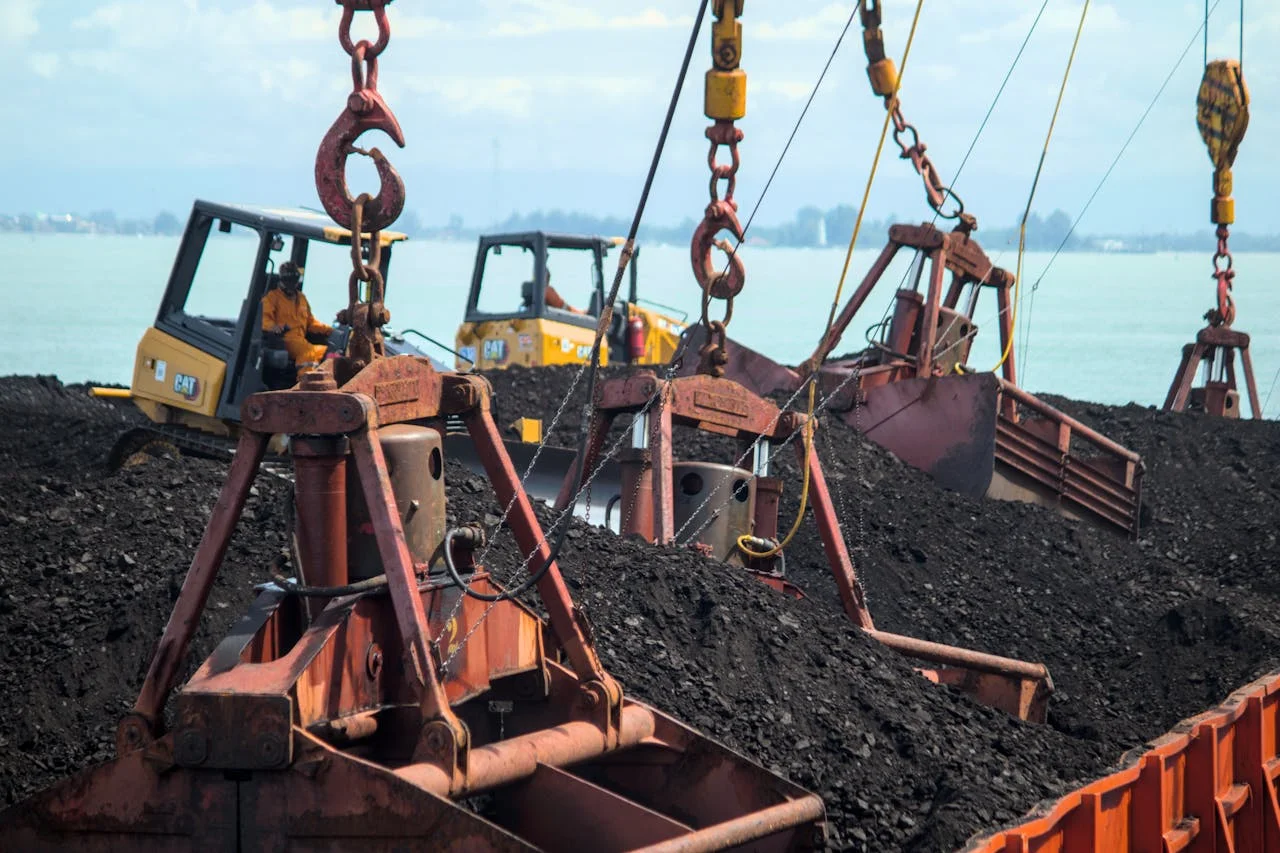
One concrete scene unfolded in Guangxi. In late October, 124 LiuGong excavators and related parts departed Beibu Gulf Port‘s Qinzhou terminal aboard the Jupiter, sailing directly to Jakarta, Indonesia, setting a record for the most construction machinery units exported on a single vessel from the port. The shipment consisted entirely of oversized, non-standard equipment, harder to load and secure than ordinary general cargo. The terminal worked with freight forwarders and the shipping company to develop a customized loading plan.
LiuGong’s electric products are also making gains overseas. The company revealed at an investor event on October 27 that pure electric loader sales doubled year-on-year this year, with penetration exceeding the industry average. Electric product gross margins are well above the average for overseas business, with repeat purchases from high-end customers and rising inquiry volumes from emerging markets.
Domestic demand is also improving at the margin. September domestic excavator sales grew 7.16 percent year-on-year, 3.24 percentage points higher than August. On the policy front, the “six networks” have been incorporated into national top-level deployment, covering water, new power grids, computing, next-generation communications, urban underground pipelines, and logistics. National Development and Reform Commission data shows new special bond issuance in September grew 50.2 percent year-on-year, 43.6 percentage points faster than August. Fiscal support for key construction areas is becoming visible.
Changes on the manufacturing side are equally notable. At LiuGong‘s excavator smart factory in Guangxi, robotic arms grip and assemble parts with millimeter precision while AGVs shuttle materials along preset paths, with no parts touching the floor. An excavator rolls off the line in under 13 minutes. Through smart manufacturing upgrades, overall capacity increased 45 percent, order response cycles shortened by 45 percent, and automation rates rose 65 percent. In March this year, the factory’s monthly output exceeded 1,500 units, a record high.
LiuGong‘s first all-terrain excavator also debuted in October. The machine can meet the demands of most Level 1 emergency rescue scenarios including floods and earthquakes, with four independent outriggers firmly planted and the boom raised high.
A national-level scenario project landed in Xuzhou. On October 20, the National Development and Reform Commission released the first batch of 136 landmark major application scenario projects. Xuzhou’s “construction machinery embodied intelligence application scenario” was selected. The scenario focuses on systematic validation under real working conditions, pushing key technologies such as intelligent perception, autonomous decision-making, and human-machine collaboration into products. For the intelligent upgrade of construction machinery, this provides a testbed with clear validation targets.
An export tax rebate concern has also been dispelled. Recent adjustments to export tax rebate policy do not involve the construction machinery industry. Some market participants had worried that policy changes could weaken export competitiveness. The removal of that concern, combined with the better-than-expected domestic and export data, has kept the industry relatively optimistic about the fourth quarter.
From September‘s data to October’s trade shows and project announcements, the construction machinery industry is undergoing a recovery driven by both domestic and external demand. Exports provide growth elasticity. Domestic equipment renewal cycles and infrastructure investment provide a floor. Electrification and intelligence determine the longer-term competitive position. LiuGong‘s doubling of electric loader sales and Xuzhou’s embodied intelligence scenario selection offer signals from two dimensions: product and application scenario.