

Electrical Machinery Exports Hit Record $262 Billion in August as AI Hardware Drives Growth
A single monthly export figure released by China’s customs authority this week tells the story of where the electrical machinery sector stands. In August, exports of mechanical and electrical products reached $262.3 billion, a record for any single month and a 33 percent increase year-on-year.
That was the eighteenth consecutive month of record-setting performance for the same month, and the ninth straight month of double-digit growth. For the first eight months of 2026, cumulative exports reached $1.87 trillion, up 26.9 percent, accounting for 64 percent of China’s total goods exports.
The composition of that growth is what makes it notable. AI-related hardware is now the primary engine. Integrated circuits and computer products together contributed 55.8 percent of the incremental export value in August, adding 18.4 percentage points to the overall growth rate for the category.
Integrated circuit exports crossed the $40 billion mark for the first time in a single month, reaching $40.73 billion, a 129.8 percent jump year-on-year. Computer product exports hit $30.4 billion, also a monthly record, up 77 percent. But the IC figure comes with a caveat: export volume actually fell 7.9 percent. The value surge is driven by rising prices, not higher shipment numbers.
Automotive exports continued their own record run, with 1.047 million vehicles shipped in August, the third consecutive month above the million-unit mark. Export value for vehicles rose 43 percent.
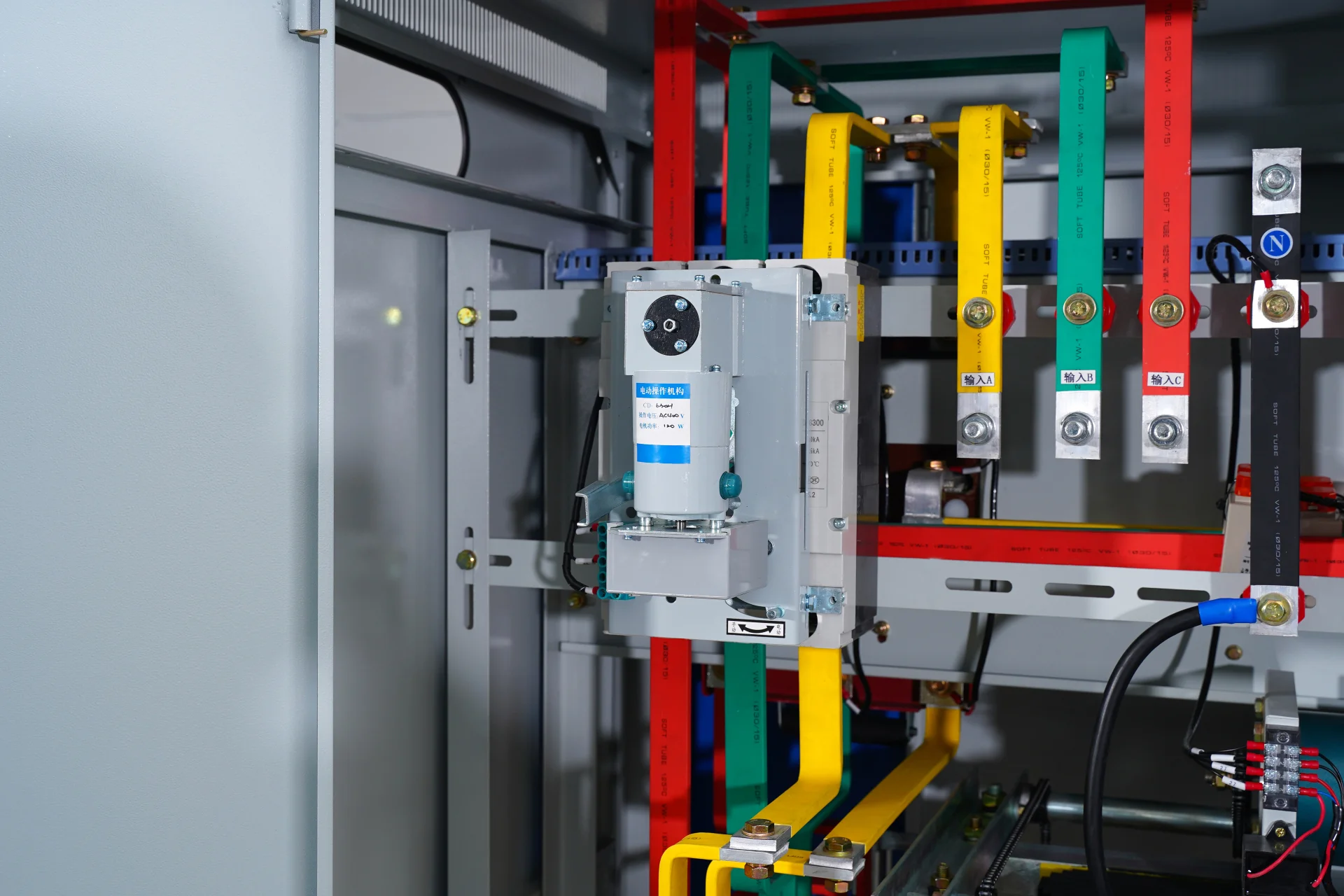
Behind the headline numbers, a structural shift is underway in the power equipment segment specifically. Low-voltage electrical equipment, the “last mile” of power distribution, is moving from mid-to-low-end import substitution toward high-end breakthroughs.
The driver is the changing role of the distribution grid itself. Under the 15th Five-Year Plan, national grid fixed-asset investment is expected to exceed 5 trillion yuan, with distribution grid investment accounting for roughly 3 trillion yuan. Distribution networks are being repositioned from passive power delivery endpoints to active nodes coordinating generation, load, and storage.
This is creating demand for equipment that can handle scenarios the old product lines were not designed for. Solid-state circuit breakers are emerging as a focal point. Unlike mechanical breakers that rely on contact separation to extinguish arcs, solid-state devices use power semiconductors to achieve microsecond-level arc-free interruption. That matters for DC systems, which have no natural zero-crossing point. Data centers operating at 800V DC and energy storage systems on the DC side are the primary applications.
Domestic manufacturers are positioning differently to capture this demand. Chint Electric leverages its full-category product matrix and distribution scale for general industrial and civil markets. Delixi Electric focuses on channel services and standardized products for traditional distribution renovation. Liangxin Electric targets high-value-added scenarios including wind, solar, storage, and computing centers, where the technical requirements diverge sharply from standard products.
The international picture is adding another layer. AI computing buildout is straining power grids globally. In Australia, data center connection inquiries in Sydney have reached 20 GW, far exceeding existing transmission capacity. Transgrid plans new 500/330 kV substations to release about 2 GW of capacity, with costs borne by data center developers.
Chinese equipment suppliers are moving into these opportunities. Jinhua Kuang, a transformer manufacturer, has secured batch orders in North America and Southeast Asia, with some products passing UL and IEEE certification and entering local main grid supply chains. Sieyuan Electric has existing 330 kV transformer delivery experience in Australia.
Meanwhile, trade policy may be shifting. The Ministry of Commerce confirmed this week that China and the U.S. are negotiating a “reciprocal tariff reduction framework” covering approximately $30 billion in trade. The framework, if implemented, would mark a move from unilateral pressure toward institutionalized negotiation. For electrical machinery exporters, even modest tariff relief on components could translate into meaningful margin improvement.
The immediate outlook is mixed. Analysts expect export growth to moderate in the fourth quarter as base effects fade and global AI investment momentum potentially cools. But the structural drivers — grid modernization, AI power demand, and the shift toward higher-value equipment — remain intact.