

Food Machinery Makers Bring Whole Production Lines to ASEAN Buyers
A batch of dumpling machines from Chengdu was carried onto the discussion table at the China-ASEAN Expo in Nanning this week. Not as display items. As samples for buyers to examine up close.
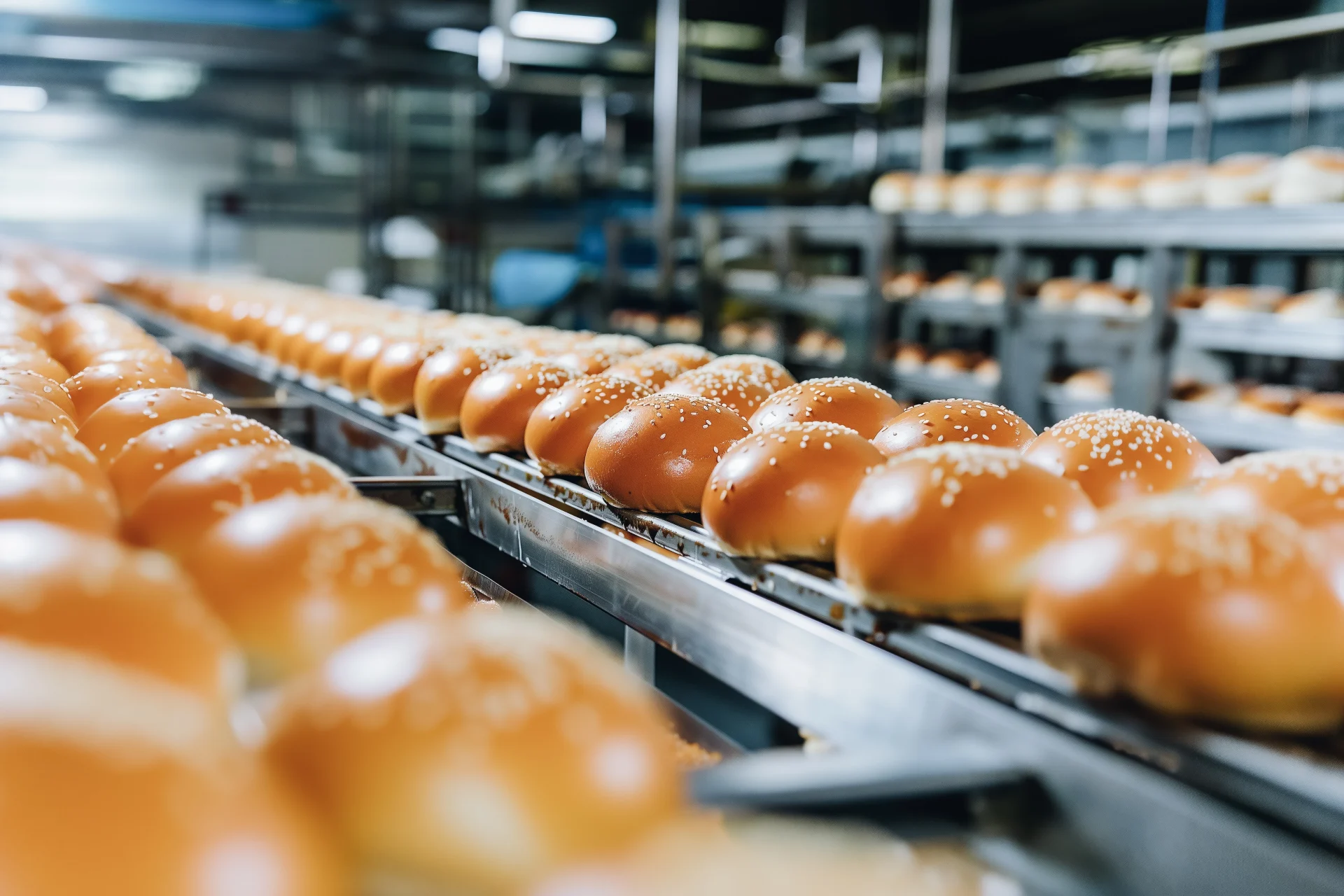
That scene captures where China’s food machinery industry stands in late September 2026. Equipment makers are no longer just selling machines. They are selling complete production solutions, and they are going where the demand is.
The export numbers confirm the trend. China’s food processing machinery exports reached 12.53 billion yuan in the first seven months of 2026, according to customs data. That is up from 10.68 billion yuan in the first half. The full-year 2025 figure was 20.33 billion yuan. The trajectory is clearly upward.
The China-ASEAN Expo procurement matchmaking session on September 18 brought together 250 buyers and 220 suppliers from 16 countries. The food processing and packaging equipment session alone generated over 100 million yuan in intended deals. AI dual-screen translation devices supported real-time Chinese-ASEAN language interpretation, removing communication barriers on the spot.
Indonesia and Vietnam have become the top two export destinations for Chinese food equipment. ASEAN countries are actively addressing gaps in their local agricultural product processing capabilities, driving sustained demand for high-precision, low-energy food processing and packaging equipment.
Russia is another market gaining attention. A total of 147 Chinese companies will participate in the 31st International Food Processing and Food Ingredients Exhibition in Moscow from September 28 to October 1. Chinese firms form the largest foreign exhibitor group this year, showcasing everything from raw material processing to packaging, quality control, cooling, storage, and logistics solutions.
On September 9, Hunan Agricultural University and Hunan Hajiang Intelligent Equipment jointly established the Modern Food Intelligent Manufacturing Industry Research Institute in Changsha. The institute aims to bridge the gap between food processing technology and equipment manufacturing.
The timing is significant. Cao Yu, general manager of Hajiang Intelligent, noted that the food industry has entered a systemic upgrade inflection point. The implementation of prepared food national standards is forcing coordinated innovation between processes and equipment. The institute is positioned as a technology source, pilot testing ground, and talent incubator, with the goal of connecting academic research directly to production lines.
On the same day, the 23rd China-ASEAN Expo’s food processing and packaging equipment procurement matchmaking session in Nanning featured AI-powered matchmaking systems and multilingual translation devices. The China Food and Packaging Machinery Industry Association coordinated with ASEAN counterparts to pre-screen procurement needs from nearly 100 local food manufacturers.
The viral spread of a 60-centimeter-long egg tart on social media is having an unexpected impact on the machinery sector. Traditional egg tart machines are designed for palm-sized products. The oversized version requires integrated forming, uniform baking, and precise temperature control. More importantly, it needs equipment that can handle irregular shapes and composite processes.
The lesson for machinery makers is clear. Viral food trends iterate extremely fast, and the peak popularity cycle for any single product is short. Stores and small processing plants are unwilling to invest heavily in large single-function equipment. Multi-functional combined machines that can adapt to different shapes and processes are becoming the preferred choice. The industry is being pushed toward modular equipment that can be quickly reconfigured for new products rather than dedicated single-product lines.
The global food processing and handling equipment market was valued at $124.85 billion in 2025 and is projected to reach $131.72 billion in 2026. By 2034, it could reach $206.85 billion, growing at 5.80 percent annually. Asia-Pacific dominates with a 30.90 percent share in 2025.
China’s grain deep-processing equipment exports are expected to reach $8.76 billion in 2026, up 12.4 percent year-on-year, accounting for 31.8 percent of global trade in that category. The export mix is shifting from single machines to full-line integration and process package exports. High value-added products now account for over 28.5 percent of exports for the first time.
The pattern is consistent across segments. In dairy machinery, China’s exports are projected at $2.86 billion in 2026, with ASEAN, Russia, and Saudi Arabia driving growth. Domestic substitution for core components like acid-resistant stainless steel pumps and valves is expected to reach 63.5 percent by the end of 2026.
What ties all of this together is a simple shift. Chinese food machinery companies are moving from selling equipment to exporting production systems. The buyers are changing too. They want solutions, not just machines. And they want them delivered where the demand is growing fastest.