


 Search


A mixed scene is playing out across the agricultural equipment sector in mid-2026. Overall industry revenue has seen sluggish growth. But exports are booming. And manufacturers are making visible progress in electrification and smart technology.
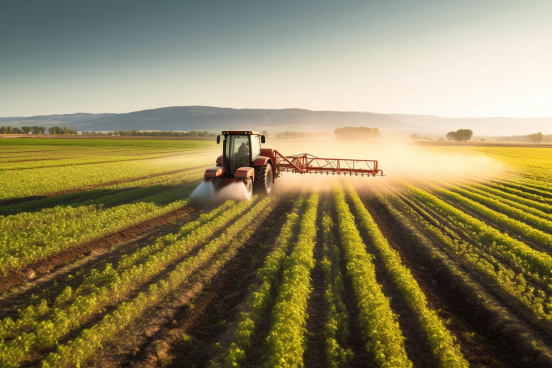
Image Source: 699pic.com
The numbers tell an interesting story. In the first quarter of 2026, exports of agricultural machinery and parts reached $5.94 billion. That is up 28.9 percent from a year earlier. Harvesting machinery exports alone jumped 58.5 percent. This export growth stands in contrast to the domestic agricultural equipment market. There, 2,327 machinery companies above a certain size reported total revenue of 266.2 billion yuan in 2025. That was up just 0.47 percent.
The export boom is not just about volume. The mix is changing too. Tractors, harvesters, and horticultural machinery are all seeing strong demand. Buyers come from Brazil, Argentina, Russia, and Central Asian countries. Manufacturers are moving beyond small machines. They are now making larger, more sophisticated products.
Take the wheat harvest in Henan province last month. A farmer used a hybrid combine harvester made by Zoomlion. He told a reporter that fuel costs dropped significantly compared to conventional machines. The hybrid model uses a battery to assist during heavy loads. It recharges when demand is low. This keeps the engine in an efficient operating range. This type of agricultural equipment is gaining attention from farmers who want to cut operating costs.
This electrification trend is visible across the industry. Companies that traditionally made construction machinery are now entering the farm equipment space. Zoomlion, Sany Group, LiuGong, and Xuzhou Construction Machinery Group have all expanded into agricultural equipment. They are bringing electric and hybrid powertrain technology from their construction lines into tractors and harvesters.
There is a reason for this crossover. Conventional farm machinery relies on hydraulic systems. Much of the patent technology there is held by foreign companies. Electric drivetrains offer a new path. A technical manager at a Jiangsu-based farm equipment company told a reporter that switching to electric allows manufacturers to bypass those patent barriers.
The shift toward smart technology is also underway. Some tractors now come with GPS or BeiDou navigation systems. These support autonomous driving and precision operations. Field data is fed into onboard computers. One model on the market allows the operator to adjust drum speed, fan speed, and reel position from a touchscreen inside the cab. The farmer no longer needs to jump off the machine repeatedly to make adjustments.
But there are clear limits. According to a technology researcher quoted in a recent industry report, domestically made agricultural robots can perform acrobatics on a stage. But they are far from ready for real farm work. The gap between prototypes and products that work reliably in the field remains wide. This is one area where agricultural equipment still lags behind global leaders.
The challenge is not just about final products. Core components remain a bottleneck. High-pressure proportional valves control hydraulic flow and pressure in smart tractors. These are entirely imported. Sensors, controllers, and certain electronic components have domestic production rates below 10 percent. A researcher at Jiangsu University noted that these small components are essential. Without them, smart farm machinery simply cannot function properly.
The Central Asian market offers an example of what works. Weichai Lovol has been selling tractors to Kazakhstan, Uzbekistan, and Turkmenistan for years. The company made specific adjustments for local conditions. Air intake and cooling systems were modified for hot, dusty environments. Some models were equipped with BeiDou or GPS dual navigation. A farm manager in Kazakhstan told a newspaper that his wheat planting efficiency increased 40 percent after switching to these tractors.
Another model has proven successful in Kazakhstan. YTO Group, a tractor manufacturer, exports parts rather than finished machines to an assembly plant in Kokshetau. The plant puts together tractors locally. This creates jobs and reduces shipping costs. A young Kazakh worker who received training from YTO engineers now assembles more than 100 machines per month. This approach has helped YTO grow its export volume from a few hundred machines per year to over a thousand.
The policy environment is supportive. The State Council released the 15th Five-Year Plan for agricultural modernization in early June. It sets a target of raising the comprehensive mechanization rate for crop farming to over 80 percent by 2030. The plan also encourages the development of smart agriculture and AI applications. This will likely increase demand for advanced agricultural equipment.
Subsidy programs continue to help farmers buy equipment. But some manufacturers want changes. A product manager at a tractor company said subsidies should be tiered. Higher-performing, smarter machines should receive more support.
Looking ahead, the industry faces several clear tasks. Core components need domestic alternatives. Batteries and motors from the automotive sector cannot be directly transplanted into farm machinery without extensive testing. One company representative said reliability testing in the field can take three to five years. Battery life in cold weather remains a concern. Dust resistance is another issue.
Workforce development is also a problem. Only 35 universities offer undergraduate programs in agricultural mechanization. The estimated talent gap is 440,000 people. Companies report difficulty finding engineers who understand both mechanical systems and software controls.
The global market opportunity is substantial. A market research report projects the agricultural equipment market will grow from $23.5 billion in 2026 to about $36.2 billion by 2032. That is an annual rate of roughly 7.5 percent. Tractors in the 25 to 100 horsepower range are expected to account for about half of that market.