

From Shanghai’s CIIF Floor: AI Reshapes Metal Processing Equipment
The metal processing equipment industry is showing clear signs of recovery, with AI accelerating its integration across the entire industrial mother machine workflow.
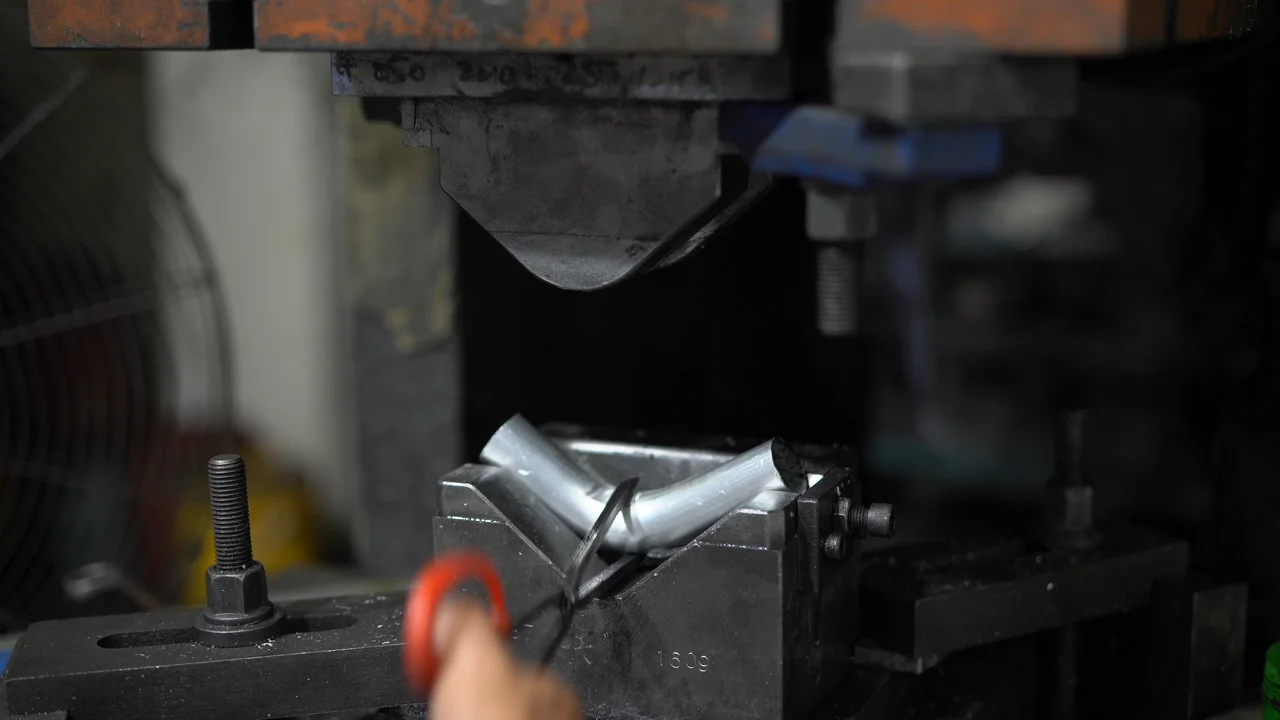
On October 12, the 26th China International Industry Fair opened at the National Exhibition and Convention Center in Shanghai. The Metalworking and CNC Machine Tool Show (MWCS), a core thematic exhibition, was held concurrently. This year‘s event gathered over 800 companies across 80,000 square meters of exhibition space, showcasing cutting-edge technologies and applications in metal processing. On the show floor, the deep integration of artificial intelligence with metal processing equipment emerged as the most prominent highlight.
Industry data confirms the recovery. According to the China Machine Tool and Tool Builders’ Association, the machine tool industry generated 530.9 billion yuan in revenue in the first half of 2026, up 7.6 percent year-on-year, continuing an upward trend. New orders and order backlogs for metal processing machine tools grew 9.2 percent and 12.1 percent respectively, with new orders for metal cutting machine tools rising 20.5 percent. From January to August, industry revenue reached 720.9 billion yuan, up 7.5 percent, with cumulative metal processing machine tool output of 709,000 units, up 8.6 percent. New orders and order backlogs grew 15.7 percent and 19.3 percent respectively.
The pull from emerging sectors is particularly notable. The explosive growth of new energy equipment, AI computing hardware, and humanoid robot components has become a core driver of recovering orders for metal cutting machine tools. Take Chuangshiji as an example. Its new orders in AI hardware (liquid cooling, optical modules) reached 1.056 billion yuan, up 352.8 percent year-on-year. New orders in the embodied robotics sector hit 307 million yuan, up 84 percent. At Tsugami Machine Tool China, the “other revenue” category including AI computing, tools, and humanoid robots has already reached 46 percent.
On the show floor, the trend of AI integrating into the entire metal processing workflow was clearly visible. TRUMPF launched its TRUMPF Ecosystem in China for the first time, bringing four sheet metal processing machines. Its TruLaser Weld 5000 laser welding system achieved L3-level welding “AI autopilot” domestically for the first time — the system can autonomously complete the vast majority of processing tasks under specific conditions without manual point-by-point teaching, maintaining stable processes even when working with highly reflective materials like aluminum alloy. Zou Yuzhen, Market and Sales Director of TRUMPF China‘s Machine Tool Division, said TRUMPF’s AI development adheres to a practical orientation: “not AI for AI‘s sake, but converting decades of laser process accumulation into automatically executable algorithms”.
HGTECH Laser and HGTECH Saibei exhibited together, leveraging “software-hardware synergy.” HGTECH Laser showcased laser intelligent equipment, while HGTECH Saibei brought a full-stack self-developed industrial digital product matrix. Its digital twin system maps the physical factory’s production status to digital space in real time; visitors wearing AR devices can view the entire process of equipment operation, logistics scheduling, and quality control. Penta Laser demonstrated its AI-driven manufacturing solution, using a three-tier architecture of system decision-making, intelligent recognition, and automatic execution to move production lines from “manned operation” to “self-driven”.
International brands are accelerating their layouts as well. AMADA brought its DX manufacturing solution and debuted the ACIES AJe multi-processing fiber laser combined machine, enhancing production efficiency and flexibility through high-speed combined processing. Salvagnini exhibited its fourth-generation P2.G4 multi-edge bending center, which can complete multi-shape bending without die changes, adapting to high-variety, low-volume sheet metal production. Bystronic showcased its smart factory overall solution, with the newly upgraded ByCut Nova laser cutting system paired with an automated marking system for seamless cutting and marking.
The form of going global is also changing. The machine tool industry exported $15.69 billion in the first eight months, up 3.8 percent year-on-year. More domestic machine tool companies are no longer limited to single-machine product exports but are shifting to providing complete process solutions for overseas customers, continuously increasing the “gold content” of foreign trade exports. Domestic companies including Han‘s Laser, HGTECH Laser, and Yawei Group showcased the latest achievements from single-machine performance improvement to full-line automation collaboration at this year’s exhibition.
From the show floor to industry data, the growth logic of the metal processing equipment industry is changing. Scale expansion is no longer the only story. Technology value enhancement, intelligent integration, and rapid response capability for emerging sectors are becoming the core of enterprise competitiveness. As noted in the “Top Ten Trends in Intelligent Transformation of Industrial Mother Machines 2026” released by the Equipment Industry Development Center of the Ministry of Industry and Information Technology, the group breakthroughs of next-generation AI technologies represented by large language models and industrial agents are pushing industrial mother machines from “passively executing instruction tools” to “physical intelligent agents that autonomously complete manufacturing tasks”.