

Energy Storage Equipment Market Heats Up as China Expands Testing Capacity
Walk into the new CATL facility in Xiamen, and you will see something unusual. Rows of storage containers hooked up to a massive grid simulator. Engineers are running tests around the clock.
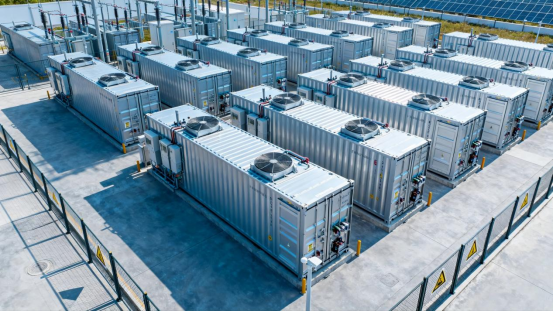
Image Source: 699pic.com
The company opened this testing site in late May. It cost $440 million. It covers nearly 25 acres. CATL claims it is the world’s largest testing and validation center for energy storage equipment.
Why build such a big facility? Because too many storage projects fail to perform as promised.
CATL looked at its own data. Nearly one-fifth of large-scale storage stations globally are underperforming. About 46.5 percent face grid connection delays of over two months. Developers cannot predict returns. Investors get nervous.
The new facility has five labs. It can simulate tough conditions. The centerpiece is a 100 MVA grid simulator. It can test more than 10 large storage containers at once. CATL says this simulator is 14 times larger than what the U.S. National Renewable Energy Laboratory has.
A researcher at the site told local media that the platform lets energy storage equipment makers prove their systems work before shipping. The goal is fewer delays and fewer accidents.
The timing makes sense. Demand for energy storage equipment is rising fast.
Look at the export numbers. Chinese customs data show inverter exports hit $1.66 billion in the first two months of 2026. That is up 57 percent from a year ago.
First, AI data centers need stable power. Second, the Middle East conflict has pushed countries to care more about energy independence.
Back in China, projects keep breaking ground.
In Tianjin, China Energy Engineering Group started building a 177 MW storage facility in January 2026. The storage capacity is 1,052.93 MWh. The project uses vanadium flow batteries, plus lead-carbon and solid-state systems.
Vanadium flow batteries store energy in liquid electrolytes. No fixed electrodes. This design is safer and lasts longer for big utility projects. The Tianjin facility will help the grid absorb more renewable energy.
In Inner Mongolia, the country’s largest single-capacity intelligent string-type energy storage equipment station went live on May 22. It is in Baotou. The station has 400 MW capacity and 2,400 MWh storage. It uses Huawei’s intelligent string PCS technology. The station delivers over 2 million kilowatt-hours daily. That is enough to power a lot of factories.
Safety rules are also getting stricter.
A mandatory national safety standard for lithium-ion storage batteries took effect in August 2025. A revised design standard for electrochemical storage stations became effective on April 1, 2026. Another fire warning standard will start in September 2026.
What does this mean for the industry? One Beijing-based storage integrator said his company increased testing budgets by about 20 percent this year just to keep up.
The market is concentrated. CATL held nearly 40 percent of the global storage battery market in 2025. BYD, Eve Energy, and Hithium are also big names. Lithium-ion storage battery shipments reached 189.7 GWh in 2024, up 86.5 percent from 2023.
But new technologies are showing up.
In Changzhou, a pilot project run by Towngas is testing EnerVenue’s aqueous metal cells. These cells last 30,000 cycles. Typical lithium-ion cells last 6,000 to 8,000 cycles. The new cells work from minus 20 to plus 60 degrees Celsius. No complex heating or cooling needed. They also do not use lithium or toxic electrolytes.
At the SNEC 2026 exhibition in Shanghai in early June, CRRC Times Electric showed off new products. A 215 kW storage converter using silicon carbide devices hit 99.02 percent efficiency. The company also displayed its Yunshu 2.0 3.45 MW converter with liquid cooling.
So where is the industry headed?
China wants to reach carbon neutrality by mid-century. That means a lot more storage. A market research report says the energy storage equipment market will keep growing fast.
But problems remain. Raw material prices go up and down. Some smaller developers cannot get financing for new projects.
For now, the industry is trying to prove that storage works reliably at scale. As one engineer at the new CATL facility put it, “Science matters more than ever now that we are in the gigawatt era.”