


 Search


Power machinery is like the "heart" of modern industry and the energy sector, encompassing everything from CNC machine tools in factories to power transmission and transformation equipment in power grids and gas turbines in power plants. Core products such as gas turbines, CNC machine tools, and intelligent power transmission and transformation equipment are constantly being upgraded to meet the demands of efficient and precise industrial production, while also helping the world achieve energy transition and better address the surge in electricity demand brought about by the development of artificial intelligence—especially with the rapid increase in the number of global AI data centers, the demand for stable and efficient power supply is growing, directly driving the demand for related power machinery.
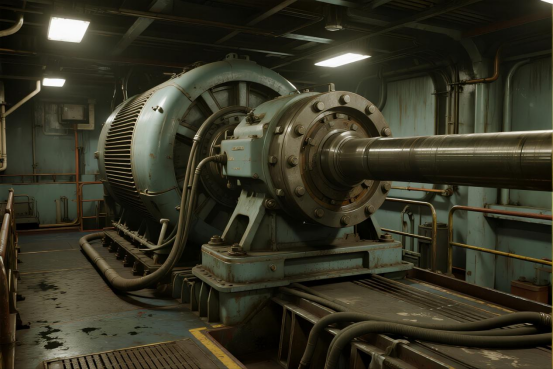
Image Source: 699pic.com
Policy support and market incentives from various countries have laid a solid foundation for the industry's development. Major economies around the world have introduced targeted measures to promote the upgrading of power infrastructure, focusing on two key issues: the integrated utilization of renewable energy (such as wind and solar power) and the upgrading and transformation of aging power grids. For example, the European Union has incorporated the upgrading of power machinery into its major green transformation plan, explicitly stating its intention to promote efficient and energy-saving power machinery to help achieve its 2030 carbon emission reduction targets. Meanwhile, the United States, facing increasing peak-hour electricity demand due to high summer temperatures and harsh winters.
Globally, there are numerous support measures, all tailored to the actual needs of businesses: for instance, financial subsidies encourage companies to replace outdated equipment with more efficient power machinery, reducing their investment burden; companies investing in technology research and development and product upgrades can enjoy tax breaks, stimulating their innovation; and policies guide the better integration of next-generation information technologies (such as 5G and artificial intelligence) with power equipment, making power machinery smarter and more user-friendly. Renowned investment institutions like UBS and Goldman Sachs have also given optimistic predictions, and with the increasing electricity demand from AI data centers, these policies will drive a new round of stable growth in the power machinery industry before 2030.
Technological innovation by major global companies is the core driving force behind the industry's growth. In January 2026, GEV, a leading global gas turbine manufacturer, released its 2025 financial report, showing outstanding performance—in the power sector alone, new orders surged 71% in the fourth quarter, with full-year growth reaching 51%. Furthermore, in October 2025, Siemens Energy and Xcel Energy, a major US power company, reached a significant cooperation agreement to supply 10 SGT 6-5000 F-type gas turbines, specifically designed to improve the grid stability in Texas and New Mexico. The biggest advantages of this type of gas turbine are its rapid start-up, high efficiency, and low emissions, perfectly meeting peak-hour electricity demand and preventing grid paralysis and power outages.
CNC machine tools are a crucial branch of power machinery, widely used in aerospace, medical manufacturing, automotive production, and many other fields. Their performance directly impacts product precision and production efficiency. Yamazen Corporation, a globally renowned machinery supplier, plans to showcase five new CNC machine tool solutions at the 2026 International Manufacturing Technology Exhibition (one of the world's largest industrial exhibitions, attracting companies and professionals from around the globe). Among the most noteworthy are the Brother Speedio M200XD1 five-axis machining center and the Matsuura MX series machine tools. These products emphasize high efficiency, flexibility, and automation, enabling rapid machining of complex parts while reducing manual labor and significantly improving production efficiency. They fully meet the needs of high-end fields such as aerospace and medical manufacturing worldwide.
Global demand for power machinery has been continuously rising, and the market size continues to expand. According to the latest industry report released by SNS Insider in January 2026, the global market size for power transmission and transformation equipment, a core area of power machinery, will steadily grow from $186.09 billion in 2025 to $317.36 billion in 2033, with an average annual growth rate of 6.99% from 2026 to 2033. There are three main drivers of this growth: first, the modernization and upgrading of the global power grid; second, the increasingly widespread integration and utilization of renewable energy; and third, the rapid development of artificial intelligence data centers, leading to a surge in demand for power supply equipment. In addition, UBS predicts that global electricity demand will grow by 8% to 9% annually from 2026 to 2030, which will further drive the continued increase in demand for power machinery.
Growth momentum is strong in all core global markets, with North America and Europe showing the most significant demand. The United States plans to add 5,000 megawatts of power capacity by 2030 to alleviate grid pressure and meet growing electricity demand, directly causing a significant increase in demand for power machinery. European demand is mainly driven by wind power integration and grid upgrades—Germany alone is expected to add 9 million kilowatts of wind power capacity by 2026, and the transmission and grid connection of wind power require substantial power machinery support, thus driving the growth in demand for related power machinery. Besides the European and American markets, the Asia-Pacific region remains an important growth market. With the continuous expansion of manufacturing and increased investment in energy infrastructure in the region, the demand for power machinery has remained strong, becoming an important support for global market growth. Currently, the power machinery industry is accelerating its transformation towards green and intelligent technologies. This is the most valued development direction for related companies worldwide and a core competitive advantage for the industry's future. Manufacturers are increasing their R&D investment to develop more energy-efficient power machinery, reducing carbon emissions during equipment operation and aligning with the global trend of carbon reduction. Simultaneously, they are combining 5G, industrial internet, and artificial intelligence technologies to achieve remote monitoring and proactive maintenance of equipment. This reduces equipment failures and lowers operating costs, creating a virtuous cycle where "AI assists equipment upgrades, and equipment supports AI's power demand."
Industry insiders indicate that, driven by both international policy support and corporate technological innovation, the global power machinery industry has entered a stage of high-quality development, with stable growth and broad prospects. In the coming years, market demand for high-performance, more energy-efficient, and more intelligent power machinery will remain strong. Companies that master core technologies and can accurately adapt to the needs of different regional markets will have an advantage in global competition, making it easier to seize development opportunities in the global market and drive the industry's continued progress.