

Testing Instruments Sector Sees Steady Growth in 2026
Testing instruments are everywhere in factories now. Walk into any electronics plant. You will see them on every bench.
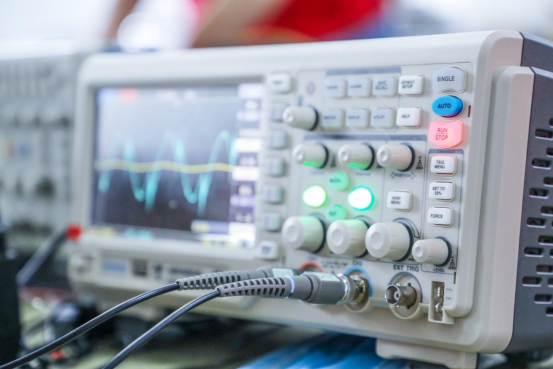
Image Source: 699pic.com
The market is growing. Not exploding. But moving up steadily.
Global test equipment hit $48.65 billion in 2025. Markets and Markets says $76.38 billion by 2032. Another report puts the broader market at $360 billion in 2025. That one says $535.5 billion by 2032.
Why the growth? Quality standards are getting tighter. That is not a fad. It is how manufacturing works now.
Take an EV battery. It gets tested hundreds of times. A semiconductor chip? Over 50 tests. From wafer to final package. Every step needs instruments.
China’s market is growing faster than the global average. Might hit 20 billion yuan this year. It was 14 billion in 2023. Exports are rising too. $3.63 billion in 2025. Up 42 percent. First four months of 2026 hit $961 million. That is 16 percent more than last year.
Where does it go? US, Russia, India, Germany, Singapore. India became number two early this year.
Who makes this stuff? Keysight. Rohde & Schwarz. Tektronix. Anritsu. Fluke. Fortive. They are all investing in 5G and EV testing.
Chinese brands are moving up. Oscilloscopes. Multimeters. Signal generators. Local products now work for most routine jobs. Prices run 30 to 50 percent less than imports.
Energy transition is a big driver. Solar panels need testing. Wind turbines need testing. EVs need lots of testing. Battery performance. Thermal management. Electromagnetic compatibility. All standard now for carmakers.
Zacks put out a report in April. Factory automation is soft. But some companies are still winning. Fluke and Fortive are riding 5G demand.
Not everything is smooth. Macroeconomy is shaky. End-markets are up and down. Exchange rates hurt in some regions. Tariffs on imported parts push costs up. They also slow things down. But tariffs have a flip side. They encourage local production.
Maintenance services are a growing slice of revenue. Calibration. Repairs. Aftermarket support. These bring in steady money. Better visibility for earnings.
What does the future look like? 5G keeps rolling. Semiconductor fabs keep expanding. EV output keeps climbing. Industry 4.0 needs constant monitoring. AI and IoT are creating new uses for testing gear.
Buyers should watch total cost. Not just the sticker price. Calibration fees. Consumables. Maintenance. Downtime. All add up. Supplier response time can matter more than the initial price.
Oscilloscopes are the biggest category. Every lab has them. Signal generators are also in demand. Multimeters are everywhere. Workhorses of the testing floor.
China’s domestic production has improved a lot. Five years ago labs bought mostly imports. Not anymore. A Shanghai distributor told me local brands now get considered for routine work. High-end still goes to imports. But the gap is shrinking.
Semiconductor testing is hot. Global sales reached $11.2 billion in 2025. Up 48 percent. China took about 40 percent. At SEMICON China 2026, local firms showed new gear for AI chips. And for automotive chips.
Environmental testing is another growth spot. Temperature chambers. Humidity chambers. Vibration testers. EV batteries need testing in extreme conditions. Cold. Hot. Humid. Manufacturers are buying more.
EMC testing is growing too. Electromagnetic compatibility matters for EVs and 5G. New rules require more testing. Labs are adding capacity.
Software is becoming important. Instruments now come with analysis tools. They help users read data. They generate reports automatically. Some use AI to spot outliers.
Policy is on the side of domestic makers. The 15th Five-Year Plan lists instruments as a priority. Import substitution is official policy. R&D money is available.
Some local firms are partnering with universities. With research institutes. Trying to close the tech gap. Mid-range products show clear progress.
Training is becoming a bigger deal. New instruments are complex. Operators need to understand software. Need to read data correctly. Suppliers are offering more training now.
The market is fragmented. No single player dominates. Keysight has the biggest share but still below 20 percent. Room for newcomers.
Renting is an option now. Some labs rent instead of buying. Lower upfront cost. Popular with startups and smaller shops.
Industry data shows steady expansion every year since 2020. Growth between 5 and 10 percent annually.
Overall the market is healthy. Headwinds exist. But fundamentals are solid. More testing is needed everywhere. Quality keeps rising. That is not changing.